Longevity Impact on Charitable Intent
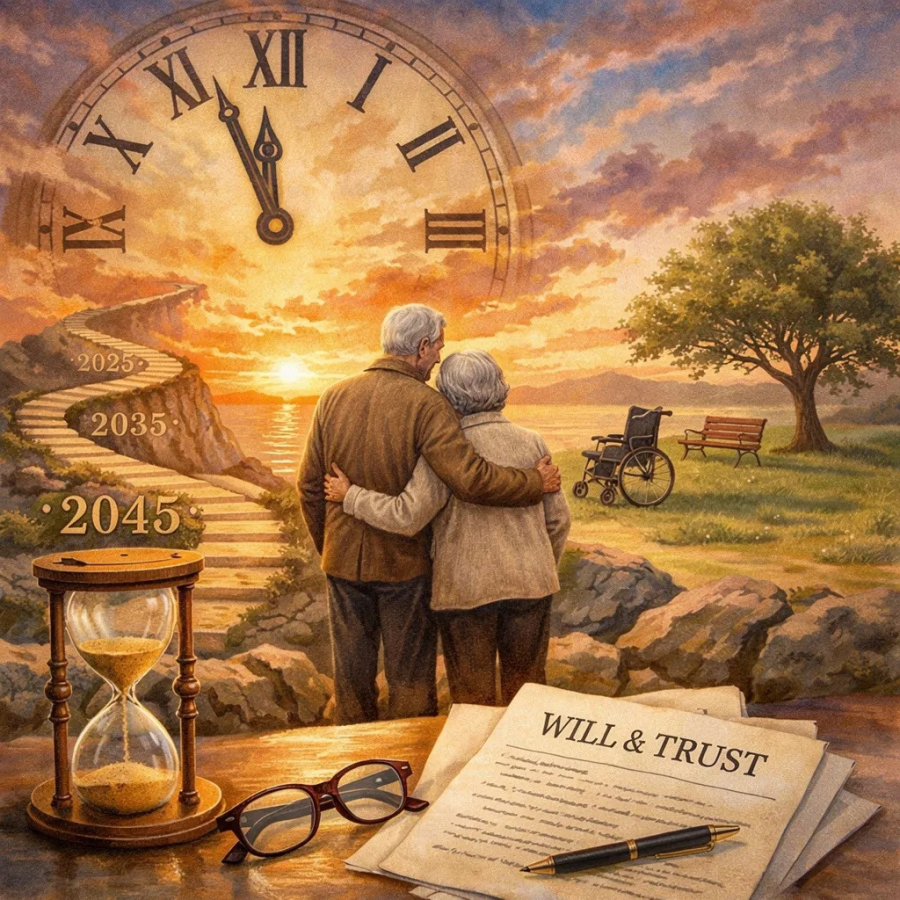
One of the defining realities of Planned Giving is that the ultimate impact of the work is often not realized for years—or even decades—until a donor's death. That long horizon is what makes PG both powerful and uniquely vulnerable, as charitable intent must remain intact through changing markets, evolving family dynamics, and increased longevity.
Over long planning horizons, a donor's declining health or loss of independence introduces several underappreciated risks to Planned Giving:
- Assets previously earmarked for philanthropy may be redeployed for care.
- Heirs or beneficiaries may step in unexpectedly
- Care-related spending can reduce the charitable outcome
- Donors' risk tolerance may change as control is lost.
- Planning disciplines may operate in silos.
Previously Allocated Assets May Be Deployed for Care
While assets may be mentally earmarked for philanthropy, they are not usually legally or structurally protected. This is the obvious but rarely acknowledged reality, and the need for care creates an immediate, non-negotiable claim, where liquidity wins over intent every time. This is the first breach.
Heirs & Beneficiaries May Step In Unexpectedly
The burden of a care need cannot be dismissed, and it is either absorbed by the family or transferred. Thus, burden is the emotional and legal accelerator when adult children intervene out of fear or necessity, or powers of attorney are exercised defensively. What you know as "Mom would have wanted…" is replaced by a conflict of interest. As dollars flow out (future inheritance) to cover the cost of memory care or 24-hour home health care, PG becomes a want versus a need. This is the second breach, and it is often irreversible.
Every Dollar Spent on Care Creates a Disproportionate Reduction in Planned Giving
This is the insight most people miss because it's not a linear equation. Care expenses hit before death, requiring liquidity/portfolio drawdowns, compounded by poor market timing matters and lost optionality. One care event can reduce remainder values, force early liquidation, or collapse otherwise "safe" giving strategies. This is the compounding effect.
Loss of Control Alters Risk Tolerance Mid-Plan
Even when assets remain sufficient, a cognitive decline changes comfort with illiquidity. Income that once felt "adequate" no longer feels safe, and donors can reverse decisions they would never have questioned earlier. This is not irrational behavior; it's a biological re-evaluation of risk, and Planned Giving rarely accounts for this shift.
Advisors Optimize in Silos
The advisory community tends to work in isolation, and while this is subtle, it is destructive for Planned Giving. Estate planners focus on asset transfer, investment advisors focus on asset growth and returns, tax professionals focus on asset efficiency, and Planned Giving professionals focus on asset legacy; yet NO ONE owns asset risk from a care event and declining health. The result is a plan that works perfectly, until it doesn't, and exposes the process failure and planning blind spot.
Planned Giving operates in a space where philanthropy and legacy are polite phrases for planning after death and passing, yet rarely is there a comfortable, intentional way to address what comes first. The potential need for Long-Term Care, particularly for affluent donors, can be both prolonged and expensive, and it can materially affect even the most thoughtful Planned Giving strategies.
Addressing decline and a donor's "longevity impact" is essential to preserving legacy planning....
20260122
 Print
Print